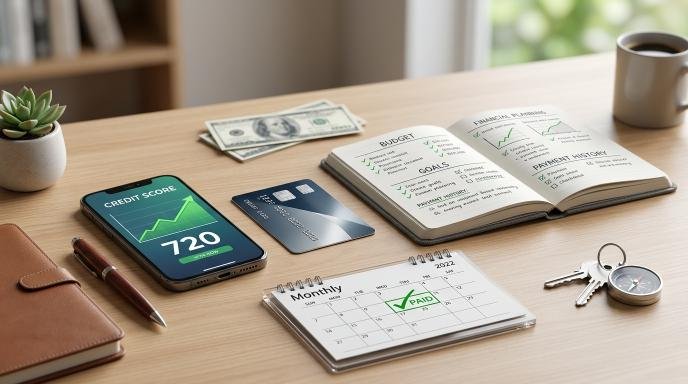
Building credit can feel confusing when you are new to credit cards. You may hear about credit scores, payment history, credit utilization, and credit reports, but it can be difficult to understand how these factors work together.
A credit card can be a useful tool for establishing and building a positive credit history when it is used responsibly. However, there is no legitimate shortcut that can instantly create a strong credit score. Building good credit usually requires consistent financial habits over time.
The good news is that beginners can take several practical steps to start building credit efficiently.
What Is a Credit Score?
A credit score is a number calculated from information in your credit report. Lenders and other businesses may use credit information when evaluating applications for certain financial products and services.
Credit scoring models can consider several factors, including payment history, credit utilization, length of credit history, and other information in your credit profile.
Because different scoring models use different calculations, your score can vary depending on the scoring model and the information being evaluated.
Why a Credit Card Can Help Build Credit
When you use a credit card and your account activity is reported to the major credit bureaus, your responsible payment behavior can contribute to your credit history.
For example, consistently making payments on time can demonstrate responsible credit management.
However, simply having a credit card is not enough. How you manage the account matters.
A cardholder who regularly misses payments or accumulates unaffordable debt may create financial problems instead of building a healthy credit profile.
Start With the Right Credit Card
If you have little or no credit history, you may not qualify for every credit card.
Beginners can research cards designed for people who are new to credit. Depending on eligibility, options may include secured credit cards or other products designed to help establish credit.
Before applying, check:
Annual fee
Interest rate
Security deposit requirements
Credit reporting practices
Minimum income requirements
Late payment fees
Foreign transaction fees
Rewards and benefits
Do not apply for several cards at once simply because you want to build credit quickly. Multiple applications can create additional inquiries and make it harder to manage your accounts.
Always Pay Your Credit Card Bill on Time
Payment history is an important part of many credit scoring models.
One of the simplest habits for building credit is making your required payment by the due date every month.
For example, imagine your credit card statement shows:
Statement balance: $300
Minimum payment: $30
Due date: October 20
You should make at least the required payment by the due date. If your budget allows, paying the full statement balance can help you avoid carrying a balance and potentially paying interest.
Set Up Automatic Payments
Automatic payments can help reduce the chance of forgetting your due date.
Many credit card issuers allow customers to schedule automatic payments from a linked bank account.
You may be able to choose:
Minimum payment
Statement balance
Fixed payment amount
Make sure enough money is available in your bank account when the payment is scheduled.
Keep Your Credit Utilization Under Control
Credit utilization refers to how much of your available revolving credit you are using.
For example, suppose your credit card has a $2,000 credit limit and your reported balance is $500.
Your utilization would be:
$500 ÷ $2,000 × 100 = 25%
A lower utilization ratio is generally viewed more favorably by many credit scoring models, although there is no single percentage that guarantees a particular score.
Avoid Maxing Out Your Card
If you have a $2,000 credit limit, regularly charging close to $2,000 can result in high utilization.
Instead of treating your credit limit as money available to spend, consider it a limit on borrowing.
A useful approach is to charge only what you can comfortably afford to repay.
Pay More Than the Minimum When Possible
Your credit card statement usually includes a minimum payment. Paying the minimum can keep your account from becoming delinquent, but it may not prevent interest from accumulating if you carry a balance.
For example, if you have a $1,000 balance and make only small minimum payments, it could take much longer to repay the debt and cost more in interest.
Paying the statement balance in full each month, when financially possible, can help you avoid interest on purchases under the card’s applicable terms.
Do Not Spend Just to Build Credit
You do not need to make large purchases to build credit.
A beginner could use a credit card for normal expenses such as:
Groceries
Gas
Phone bills
Streaming services
Household purchases
The key is not how much you spend but how responsibly you manage the account.
For example, if your monthly phone bill is $60, you could charge that expense to your card and then pay the statement according to the card’s terms.
There is no need to buy an expensive product simply because you want to show credit activity.
Understand Your Statement Closing Date
Many beginners focus only on the payment due date. However, understanding your statement closing date can also help you manage your reported balance.
The statement closing date is generally the date when the billing cycle ends and the issuer prepares your statement.
Your balance around the reporting period can affect the balance that appears on your credit report, depending on when your issuer reports information.
This is another reason why monitoring your balance throughout the month can be useful.
Keep Older Accounts Open When Appropriate
The length of your credit history can be another factor considered by credit scoring models.
Closing an older credit card may reduce the age of your available credit history or otherwise affect your credit profile.
However, keeping an account open is not always the right choice. If a card has an expensive annual fee or creates financial problems, you should consider the overall costs and circumstances before deciding what to do.
Monitor Your Credit Reports
Building credit is easier when you know what is being reported about you.
Review your credit reports periodically for:
Incorrect personal information
Accounts you do not recognize
Incorrect payment information
Wrong balances
Duplicate accounts
Other inaccurate information
If you find information that you believe is inaccurate, follow the appropriate dispute process with the relevant credit reporting company and, when appropriate, the company that supplied the information.
Avoid Applying for Too Much Credit at Once
Applying for multiple credit cards within a short period may result in multiple hard inquiries, depending on the application and issuer.
Instead of applying for every card you see advertised, research your options first.
Compare:
Feature What to Check
Annual Fee Is there an ongoing yearly cost?
APR What interest rate applies?
Credit Reporting Does the issuer report account activity?
Credit Limit Is the limit suitable for your situation?
Security Deposit Is one required?
Rewards Are rewards useful to you?
Fees What other charges can apply?
This can help you choose a card based on your actual needs rather than advertisements alone.
How Long Does It Take to Build Credit?
There is no fixed timeline for building a strong credit profile.
Your results can depend on factors such as:
Existing credit history
Payment history
Credit utilization
Number and age of accounts
Credit applications
Information reported by creditors
Some people may begin establishing credit history relatively quickly after an account starts reporting, but developing a strong and established credit profile generally takes consistent management over time.
The goal should be to build good financial habits rather than chase a specific score as quickly as possible.
Common Credit Card Mistakes Beginners Should Avoid
New cardholders often make mistakes that can make credit management more difficult.
Missing Payments
Even one missed payment can create fees and potentially affect your credit history if it becomes sufficiently delinquent and is reported.
Maxing Out the Card
Using most or all of your available credit can result in high utilization.
Carrying Debt for Rewards
Credit card rewards are not worth paying unnecessary interest. Never spend more than you can reasonably afford just to earn points or cashback.
Applying for Too Many Cards
Multiple applications can make your credit management more complicated and may result in additional hard inquiries.
Ignoring Statements
Your monthly statement contains important information about your balance, transactions, fees, and payment due date.
A Simple Credit-Building Strategy for Beginners
If you are just starting, keep your strategy simple.
Use one suitable credit card for a few regular purchases. Keep your spending within your budget. Monitor your balance during the month and make payments on time.
Whenever possible, pay the statement balance in full rather than carrying debt from month to month.
Then monitor your credit reports and continue practicing the same habits consistently.
Final Thoughts
Building credit with a credit card is less about finding a quick trick and more about developing consistent financial habits.
Choose a credit card that fits your situation, make payments on time, keep your balances manageable, avoid unnecessary debt, and monitor your credit reports for accuracy.
Most importantly, remember that a credit card is a financial tool—not extra income. Using it responsibly can help you establish a positive credit history over time, while careless borrowing can create unnecessary fees, interest, and debt.
For beginners, the best approach is simple: spend within your budget, pay on time, monitor your credit, and stay consistent.